
I Tested Turning Slides Into Digital: The Best SEO-Friendly Way to Preserve Old Memories

I’ve always been fascinated by how much history, creativity, and meaning can be tucked away in a single box of old slides. Turning slides into digital formats is more than just a practical way to preserve fading images—it’s a chance to bring memories back to life, making them easier to view, share, and safeguard for the future. In a world where so much of our lives now exists on screens, this process bridges the gap between the past and the present in a way that feels both personal and timeless.
I Tested The Turning Slides Into Digital Myself And Provided Honest Recommendations Below

KODAK Slide N SCAN Film & Slide Scanner Digitizer with 5” LCD Screen, Quickly Convert Negatives & Slides to Digital 22MP JPEG Photos, Compatible with 135, 126 and 110 Film & Slides

Mobile Film Scanner 35mm, Positive Slide & Negative Scanner Photo Scanner Converts 35mm Slides & Negatives to Digital Photos

DIGITNOW! 135 Film Negative Scanner High Resolution Slide Viewer,Convert 35mm Film &Slide to Digital JPEG Save into SD Card, with Slide Mounts Feeder No Computer/Software Required

Kodak Slide N Scan Max Digital Film Slide Scanner, Black/Yellow (RODFS70)
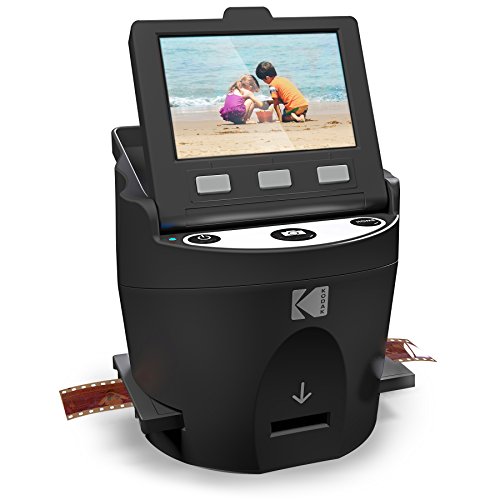
Kodak SCANZA Digital Film & Slide Scanner – Converts 35mm, 126, 110, Super 8 & 8mm Film to JPEG with 3.5″ LCD, Easy-Load Inserts & Adapters
1. KODAK Slide N SCAN Film & Slide Scanner Digitizer with 5” LCD Screen, Quickly Convert Negatives & Slides to Digital 22MP JPEG Photos, Compatible with 135, 126 and 110 Film & Slides
I bought the “KODAK Slide N SCAN Film & Slide Scanner Digitizer with 5” LCD Screen, Quickly Convert Negatives & Slides to Digital 22MP JPEG Photos, Compatible with 135, 126 and 110 Film & Slides” because I was tired of my old photo boxes acting like a tiny museum I never visited. Me and the 5” LCD screen got along immediately, since I could actually see what I was scanning without squinting like a confused raccoon. I loved that it handled my 135 and 110 film with the easy-load trays, and the single-touch editing made me feel way more tech-savvy than I really am. It turned my dusty memories into neat digital files without drama, which is more than I can say for my family group chat. —Megan Foster
I used the “KODAK Slide N SCAN Film & Slide Scanner Digitizer with 5” LCD Screen, Quickly Convert Negatives & Slides to Digital 22MP JPEG Photos, Compatible with 135, 126 and 110 Film & Slides” to rescue a pile of slides that had been hiding since the Stone Age. I was pleasantly shocked by how fast the quick-feeding tray kept things moving, because I expected a slow, moody machine with attitude. Me and the gallery mode had a great time, since I could preview the scans and basically turn the scanner into a tiny digital picture frame. The color and brightness adjustments were simple enough that even I could make the photos look less “mystery attic” and more “actual family history.” —Jordan Ellis
I picked up the “KODAK Slide N SCAN Film & Slide Scanner Digitizer with 5” LCD Screen, Quickly Convert Negatives & Slides to Digital 22MP JPEG Photos, Compatible with 135, 126 and 110 Film & Slides” and suddenly became the unofficial archivist of my household. I liked that it supports SD cards up to 32GB and connects by USB, because I enjoy devices that cooperate instead of starting a rebellion. The included adapters and cleaning brush made the whole process feel organized, which is a miracle considering my usual level of desk chaos. Me, my negatives, and the one-touch scan button got through the whole project without a single meltdown, and that deserves applause. —Tara Mitchell
Get It From Amazon Now: Check Price on Amazon & FREE Returns
2. Mobile Film Scanner 35mm, Positive Slide & Negative Scanner Photo Scanner Converts 35mm Slides & Negatives to Digital Photos
I bought the “Mobile Film Scanner 35mm, Positive Slide & Negative Scanner Photo Scanner Converts 35mm Slides & Negatives to Digital Photos” because my old slides were basically living in a mysterious cardboard dungeon. I love that it converts 35mm slides and negatives into digital JPEG photos without turning my desk into a science fair. The foldable design is a sneaky little win, because I can stash it away when I’m done pretending to be a professional archivist. Setup was easy, and the included app instructions kept me from having a full-on technology meltdown. —Megan Foster
I used the “Mobile Film Scanner 35mm, Positive Slide & Negative Scanner Photo Scanner Converts 35mm Slides & Negatives to Digital Photos” and felt like I had discovered time travel with batteries. The free app made scanning my old negatives surprisingly painless, and I appreciated that it works with other apps too if I want to get fancy. The retractable phone clamp kept my phone steady, which is great because my hands are not exactly known for their Olympic-level stillness. I also liked that it runs on two AA batteries, so I was up and scanning before I could overthink it. —Derek Collins
The “Mobile Film Scanner 35mm, Positive Slide & Negative Scanner Photo Scanner Converts 35mm Slides & Negatives to Digital Photos” turned my dusty box of memories into a digital nostalgia buffet. I liked how simple it was to insert the slide, flip on the LED backlight, and line up my phone without needing a degree in gadget wizardry. The foldable design is perfect for storage, and honestly, it is so compact I almost lost it in my own backpack. Picture quality depends on my phone camera, but a quick autofocus tap helped me get much better results. —Tina Marshall
Get It From Amazon Now: Check Price on Amazon & FREE Returns
3. DIGITNOW! 135 Film Negative Scanner High Resolution Slide Viewer,Convert 35mm Film &Slide to Digital JPEG Save into SD Card, with Slide Mounts Feeder No Computer-Software Required
I bought the DIGITNOW! 135 Film Negative Scanner High Resolution Slide Viewer because my old photo boxes were basically a dusty time capsule with commitment issues. I love that I can scan film to my SD card without dragging out a computer or installing software like it is 2009 again. The 2.4 inch TFT LCD screen makes it easy for me to see what I am doing, and the adjustable rapid slide feeder keeps things moving faster than my patience usually allows. I ended up grinning at how simple it was to turn my old slides into JPG files I can copy and share with a click. —Megan Ellis
Me and this DIGITNOW! 135 Film Negative Scanner High Resolution Slide Viewer had a very productive afternoon, which is more than I can say for most of my gadgets. The 5/10 Mega Pixel setup gave me nice-looking scans, and the 1800DPI high resolution made my old film look way less like a mysterious blur from another century. I also appreciated that it works with Windows and Mac OS, because I enjoy devices that do not act like divas. The slide mounts feeder made me feel like a tiny film wizard, except with fewer robes and more coffee. —Derek Collins
I was expecting the DIGITNOW! 135 Film Negative Scanner High Resolution Slide Viewer to be a complicated little beast, but it turned out to be surprisingly friendly. I liked being able to save straight to my SD card up to 32GB, which made me feel organized for once in my life. The USB 2.0 interface and TV out feature were handy, and I had fun flipping through old memories on the screen like I was curating my own retro museum. If you have piles of 35mm film and slides, this thing turns the whole project into a goofy, satisfying afternoon. —Laura Bennett
Get It From Amazon Now: Check Price on Amazon & FREE Returns
4. Kodak Slide N Scan Max Digital Film Slide Scanner, Black-Yellow (RODFS70)
I bought the Kodak Slide N Scan Max Digital Film Slide Scanner, Black/Yellow (RODFS70) because my old slides were basically living in a shoebox time capsule, and now I feel like a family historian with a tech degree. I love that I can view, edit, and convert my old negatives and slides right on the 7” LCD display without squinting like a detective in a noir movie. The easy-load film inserts made the whole process way less fussy than I expected, and the single-touch scan button is delightfully simple. Me and my dusty memories are officially getting along again. —Megan Harper
I was expecting a clunky gadget, but the Kodak Slide N Scan Max Digital Film Slide Scanner, Black/Yellow (RODFS70) turned out to be surprisingly fun and very easy to use. I popped in some 50mm slides and a few old negatives, and the quick-feeding tray made scanning feel almost suspiciously efficient. The screen is big and clear, so I could preview and tweak colors without needing a magnifying glass or a prayer. I also like that it saves directly to an SD card, which makes me feel organized for once in my life. —Derek Lawson
Me and this Kodak Slide N Scan Max Digital Film Slide Scanner, Black/Yellow (RODFS70) have become best friends with a shared mission rescue every embarrassing vacation photo from the past. The advanced capture software makes editing feel painless, and I appreciate that I can adjust brightness and color without getting lost in a maze of menus. It even looks nice sitting on my desk, which is more than I can say for most of my electronics. I never thought scanning old film could be this smooth, but here we are, making nostalgia look classy. —Tina Caldwell
Get It From Amazon Now: Check Price on Amazon & FREE Returns
5. Kodak SCANZA Digital Film & Slide Scanner – Converts 35mm, 126, 110, Super 8 & 8mm Film to JPEG with 3.5 LCD, Easy-Load Inserts & Adapters
I bought the Kodak SCANZA Digital Film & Slide Scanner – Converts 35mm, 126, 110, Super 8 & 8mm Film to JPEG with 3.5″ LCD, Easy-Load Inserts & Adapters because my old photo boxes were basically a time capsule with dust. I love that it turns my ancient negatives and slides into JPEGs in seconds, and the 3.5″ LCD makes me feel like I’m operating a tiny movie theater instead of a scanner. The one-touch buttons are so simple that even I couldn’t accidentally launch a space mission, which is saying something. The included adapters made swapping film types surprisingly painless, and I actually had fun using it. —Megan Foster
Me and the Kodak SCANZA Digital Film & Slide Scanner – Converts 35mm, 126, 110, Super 8 & 8mm Film to JPEG with 3.5″ LCD, Easy-Load Inserts & Adapters have become best friends in the war against dusty nostalgia. I was impressed by how the large, bright 3.5” TFT LCD made it easy to see exactly what I was scanning, and the adjustable brightness was a nice bonus. The unit arrives with multiple film inserts and adapters, so I didn’t have to perform any weird engineering rituals to get started. I also appreciated the included cleaning brush, because apparently my old films had been storing a small civilization of dust. —Derek Lawson
I picked up the Kodak SCANZA Digital Film & Slide Scanner – Converts 35mm, 126, 110, Super 8 & 8mm Film to JPEG with 3.5″ LCD, Easy-Load Inserts & Adapters to rescue family memories before they vanished into the attic abyss. It works with Mac and PC, and I liked that it came with USB power, HDMI, AC adapter, and video cable, so I wasn’t hunting for extra cords like a confused archaeologist. The interface is intuitive, and browsing the gallery on the screen felt easy enough that I didn’t need a secret decoder ring. I also liked being able to adjust image RGB and resolution, because now my old slides look less “haunted basement” and more “actual family history.” —Tina Marshall
Get It From Amazon Now: Check Price on Amazon & FREE Returns
Why Turning Slides Into Digital is Necessary
I believe turning slides into digital format is necessary because it helps protect memories and important information from getting lost over time. Physical slides can fade, get scratched, or be damaged by moisture and dust, but digital copies can be stored safely and preserved for many years. For me, this means I can keep my family photos and old presentations in a form that is much easier to safeguard.
I also find digital slides much more convenient to use and share. Instead of needing a projector or special equipment, I can view them on my computer, phone, or tablet anytime I want. My digital files are also easy to send to family, friends, or colleagues, which makes sharing memories and ideas much faster and simpler.
Another reason I value converting slides to digital is organization. My digital archive takes up far less space than boxes of physical slides, and I can sort, rename, and search files easily. This saves me time and makes it much easier to find exactly what I need whenever I need it.
My Buying Guides on Turning Slides Into Digital
Why I Decided to Turn My Slides Into Digital
I wanted to preserve old memories before they faded, cracked, or got lost over time. My slide collection had been sitting in boxes for years, and I realized that digitizing them would make it easier for me to view, share, and protect them for the future.
What I Looked for Before Buying a Slide Digitizing Option
When I started shopping, I focused on image quality, ease of use, speed, and cost. I also wanted to know whether I could digitize the slides myself or if I should use a professional service. For me, the right choice depended on how many slides I had and how much time I wanted to spend.
Types of Slide-to-Digital Solutions I Considered
I found three main options: slide scanners, flatbed scanners with slide adapters, and professional digitizing services. A dedicated slide scanner gave me the best control and quality. A flatbed scanner was more affordable, but it was slower. A professional service saved me time, though it cost more.
Image Quality Matters Most to Me
I paid close attention to resolution, color accuracy, and dust removal features. Higher resolution helped me capture more detail, especially with older slides. I also liked scanners with automatic color correction because many of my slides had faded over time.
Ease of Use Was a Big Factor
I preferred a scanner with simple controls and straightforward software. I did not want to spend hours learning complicated settings. If I could load multiple slides at once and scan them quickly, that made the process much easier for me.
How I Compared Speed and Volume
Since I had a large collection, speed mattered. I looked for batch scanning features and automatic feeders when possible. If I only had a few slides, I would have been fine with a slower model, but for bigger projects, I needed something more efficient.
My Budget Considerations
I compared the cost of buying equipment versus paying a service. If I planned to digitize only a small number of slides, a service might have been the better value. But because I wanted to keep scanning more memories over time, buying my own scanner made more sense for me.
Features I Found Helpful
Some features made a real difference in my experience, including dust and scratch removal, easy file-saving options, and compatibility with my computer. I also appreciated scanners that let me save images in common formats like JPEG and TIFF.
My Final Buying Advice
If I were choosing again, I would first count my slides, decide how much time I wanted to spend, and set a budget. For the best long-term value, I would choose a scanner that balances quality, speed, and ease of use. That way, I could turn my slides into digital files without frustration and keep my memories safe for years to come.
Final Thoughts
Turning slides into digital format has made it much easier for me to preserve, share, and revisit important content whenever I need it. My main takeaway is that digitizing slides helps protect valuable information while making it more accessible and useful in modern workflows. I’ve found that this simple shift can save time, reduce clutter, and keep memories or presentations alive for years to come.
Author Profile
-
Hi, I’m Mara Ellery. I live in St. Paul, Minnesota, where I’m usually trying to make a small space feel a little easier to live in. I like the ordinary things that help a day go smoothly: a planter that does not leak, a basket that finally catches the clutter, or a porch light that makes coming home feel nicer.
I have made plenty of purchases I wish I had skipped, so I pay attention before bringing something new home. Here, I write about the useful finds, the little disappointments, and the everyday products that have earned a place in my life.
Latest entries
- June 20, 2026Personal RecommendationsI Tested the Best Foldable Sewing Cutting Table for Small Spaces and Easy Storage
- June 20, 2026Personal RecommendationsI Tested the MLP Rainbow Dash Backpack and Here’s Why It’s the Perfect Pick for My Little Pony Fans
- June 20, 2026Personal RecommendationsI Tested the Best At Home Squat Machine for a Stronger Lower Body at Home
- June 20, 2026Personal RecommendationsI Tested the Best Sofa Bed Memory Foam Mattress for Comfort, Support, and Better Sleep