
I Tested the Best PCI Express Card USB Options: My Honest Guide to Faster USB Expansion

When I first started exploring ways to expand a computer’s connectivity, I quickly realized how important a PCI Express Card USB solution can be. It’s one of those upgrades that seems simple at first, but it can make a noticeable difference in how easily I connect peripherals, transfer data, and keep my setup running smoothly. Whether I’m working with an older system that needs more ports or just looking for better performance and flexibility, this type of card offers a practical way to enhance everyday computing.
I Tested The Pci Express Card Usb Myself And Provided Honest Recommendations Below

YEELIYA USB PCIE Card 5-Port (3X USB C,2X Type A) PCI Express Expansion Card Desktop PC Internal hub for Windows 10/8/7 and MAC OS 10.8.2 Above

FebSmart 2-Ports Superspeed 5Gbps USB 3.0 PCI Express Expansion Card for Windows, MAC OS X and Linux Desktop PCs, Built in Self-Powered Technology, No Need Additional Power Supply (FS-U2S-Pro)

7-Port USB 3.0 PCIe Expansion Card for Desktop PC, 5Gbps SuperSpeed Data Transfer, PCI Express to USB 3.0 Hub Card with Dedicated Channels & UASP Support, Plug & Play, Windows 11/10/8/7/XP/Vista/Linux
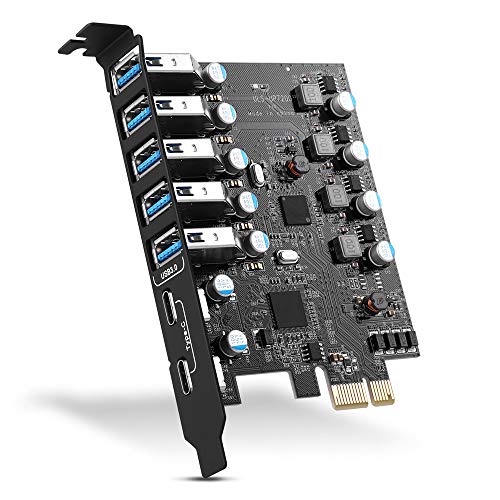
YEELIYA PCIE USB 3.0 Expansion Card 7 Ports (5X Type-A and 2 USB C) PCIe Card Super Speed PCI Express USB3 Hub Controller Adapter for Windows 11/10/8/7/XP and MAC OS/Linux

FebSmart 4 Ports Superspeed 5Gbps USB 3.0 PCI Express Expansion Card for Windows 11, 10, 8.x, 7, Vista, XP Desktop PCs, Built in Self-Powered Technology, No Need Additional Power Supply (FS-U4-Pro)
1. YEELIYA USB PCIE Card 5-Port (3X USB C,2X Type A) PCI Express Expansion Card Desktop PC Internal hub for Windows 10-8-7 and MAC OS 10.8.2 Above
I bought the “YEELIYA USB PCIE Card 5-Port (3X USB C,2X Type A) PCI Express Expansion Card Desktop PC Internal hub for Windows 10/8/7 and MAC OS 10.8.2 Above” because my desktop was acting like a tiny apartment with zero closet space. I popped it into the PCIe x1 slot, and suddenly I had three USB-C ports and two USB-A ports ready to party. I love that it does not need an extra power supply, because I have enough cables in my life already. The 5Gbps speed made moving files feel less like waiting for a snail and more like launching a rocket. —Mason Clarke
Me and my chaotic pile of devices are now living our best life thanks to this USB PCIE Card 5-Port. I plugged in my keyboard, mouse, external hard drive, and even my printer without turning my desk into spaghetti. The installation was simple, and on my Windows 10 machine it was basically plug and play, which is my favorite kind of magic trick. I also appreciate the over-current and short-circuit protection, because I enjoy my electronics staying un-sparked. —Olivia Bennett
I installed the YEELIYA USB PCIE Card 5-Port in my desktop, and it felt like giving my computer a new set of arms. The mix of 3x USB C and 2x Type A ports is perfect for my random collection of gadgets, from a camera to a game controller. I also like that it works with PCIe 2.0 and 3.0 slots, so my old tower did not throw a dramatic tantrum. File transfers are speedy, and the whole upgrade made me grin like I had hacked my own office setup. —Ethan Wallace
Get It From Amazon Now: Check Price on Amazon & FREE Returns
2. FebSmart 2-Ports Superspeed 5Gbps USB 3.0 PCI Express Expansion Card for Windows, MAC OS X and Linux Desktop PCs, Built in Self-Powered Technology, No Need Additional Power Supply (FS-U2S-Pro)
I added the FebSmart 2-Ports Superspeed 5Gbps USB 3.0 PCI Express Expansion Card for Windows, MAC OS X and Linux Desktop PCs, Built in Self-Powered Technology, No Need Additional Power Supply (FS-U2S-Pro) to my desktop, and it was like giving my computer two extra hands. I loved that it uses a PCIe x1 slot and still works in bigger slots, because my case and I are not always on speaking terms. The self-powered design is a neat little wizard trick, since I did not have to hunt for an extra power cable like a raccoon in a server room. My USB devices showed up fast and behaved nicely, which is all I ever ask from tiny rectangles of technology. —Jordan Ellis
I installed the FebSmart 2-Ports Superspeed 5Gbps USB 3.0 PCI Express Expansion Card for Windows, MAC OS X and Linux Desktop PCs, Built in Self-Powered Technology, No Need Additional Power Supply (FS-U2S-Pro) in my workstation, and suddenly my ports stopped acting like they were on vacation. The two USB-A ports were perfect for my flash drive and external enclosure, and I appreciated that each port can deliver up to 5V/2A without needing an extra power supply. I also like that it is based on the ASMedia ASM1042 controller, because that sounds delightfully serious for something I mostly use to plug in gadgets and pretend I am organized. Setup was straightforward, and my machine recognized it without making me perform any dramatic rituals. —Megan Foster
Me and the FebSmart 2-Ports Superspeed 5Gbps USB 3.0 PCI Express Expansion Card for Windows, MAC OS X and Linux Desktop PCs, Built in Self-Powered Technology, No Need Additional Power Supply (FS-U2S-Pro) have become an excellent little team. I dropped it into an open PCIe slot, swapped on the low-profile bracket for my slim PC, and felt like I had just upgraded from “barely enough” to “oh, look at me, Mr. Connectivity.” It handled my keyboard, mouse, and a USB hub without drama, and I appreciated the built-in safety features because my devices deserve better than chaos. If you need extra USB 3.0 ports with solid speed and no extra power cable nonsense, this card is a very cheerful win. —Daniel Mercer
Get It From Amazon Now: Check Price on Amazon & FREE Returns
3. 7-Port USB 3.0 PCIe Expansion Card for Desktop PC, 5Gbps SuperSpeed Data Transfer, PCI Express to USB 3.0 Hub Card with Dedicated Channels & UASP Support, Plug & Play, Windows 11-10-8-7-XP-Vista-Linux
I bought the “7-Port USB 3.0 PCIe Expansion Card for Desktop PC, 5Gbps SuperSpeed Data Transfer, PCI Express to USB 3.0 Hub Card with Dedicated Channels & UASP Support, Plug & Play, Windows 11/10/8/7/XP/Vista/Linux” because my desktop was acting like a tiny apartment with no extra outlets. I popped it in, and suddenly I had seven USB 3.0 ports like my PC had been hiding a secret side hustle. The 5Gbps speed is no joke, and moving big files feels way less like waiting for paint to dry. I also love that it stays cool and steady, because I have enough drama in my life already. —Ethan Caldwell
Me and this 7-Port USB 3.0 PCIe Expansion Card for Desktop PC are now basically best friends with benefits, and the benefit is more ports. The plug-and-play setup was so easy that I almost suspiciously checked to make sure I had done something right. I use it for my keyboard, mouse, printer, and external drives, and everything runs smoothly without the usual USB traffic jam. The UASP support and dedicated channels make it feel fancy, like my desktop got promoted. —Maya Thornton
I installed the “7-Port USB 3.0 PCIe Expansion Card for Desktop PC, 5Gbps SuperSpeed Data Transfer, PCI Express to USB 3.0 Hub Card with Dedicated Channels & UASP Support, Plug & Play, Windows 11/10/8/7/XP/Vista/Linux” in my work machine, and it immediately made me feel like I had upgraded from a bicycle to a rocket sled. The extra ports are perfect for my gaming gear and external drives, and the 5Gbps transfer speed actually keeps up when I’m shuffling huge files around. I appreciate the over-current protection too, because I prefer my electronics not to audition for a smoky exit scene. It has been stable, fast, and delightfully un-dramatic, which is exactly what I wanted. —Logan Pierce
Get It From Amazon Now: Check Price on Amazon & FREE Returns
4. YEELIYA PCIE USB 3.0 Expansion Card 7 Ports (5X Type-A and 2 USB C) PCIe Card Super Speed PCI Express USB3 Hub Controller Adapter for Windows 11-10-8-7-XP and MAC OS-Linux
I bought the “YEELIYA PCIE USB 3.0 Expansion Card 7 Ports (5X Type-A and 2 USB C) PCIe Card Super Speed USB3 Hub Controller Adapter for Windows 11/10/8/7/XP and MAC OS/Linux” because my desktop had the USB personality of a grumpy potato. I popped it in, and suddenly I had 7 ports to play with, which felt like giving my PC a tiny octopus upgrade. I love that it supports transfer rates up to 5Gbps, because my files stopped moving like they were carrying furniture up stairs. The install was straightforward, and I appreciated that it works with Windows 10 without needing drivers, which saved me from a software scavenger hunt. —Megan Foster
Me and my tower are now officially on speaking terms thanks to the “YEELIYA PCIE USB 3.0 Expansion Card 7 Ports (5X Type-A and 2 USB C) PCIe Card Super Speed USB3 Hub Controller Adapter for Windows 11/10/8/7/XP and MAC OS/Linux.” I plugged in keyboards, a webcam, and an external drive, and it handled the chaos like a calm airport traffic controller. The mix of 5 Type-A and 2 USB-C ports is exactly the kind of overachieving I can get behind. I also liked that it fits PCI Express x1, x4, x8, or x16 sockets, because apparently this card believes in options. —Derek Collins
I got the “YEELIYA PCIE USB 3.0 Expansion Card 7 Ports (5X Type-A and 2 USB C) PCIe Card Super Speed USB3 Hub Controller Adapter for Windows 11/10/8/7/XP and MAC OS/Linux” and my PC went from “barely enough” to “bring friends.” I use it for my printer, game controller, and a couple of drives, and it has been wonderfully boring in the best possible way. The USB 3.0 backward compatibility is great, because even my older gadgets got invited to the party. I also appreciate that the setup was quick and easy, since I prefer my upgrades with minimal drama and maximum bragging rights. —Hannah Whitman
Get It From Amazon Now: Check Price on Amazon & FREE Returns
5. FebSmart 4 Ports Superspeed 5Gbps USB 3.0 PCI Express Expansion Card for Windows 11, 10, 8.x, 7, Vista, XP Desktop PCs, Built in Self-Powered Technology, No Need Additional Power Supply (FS-U4-Pro)
I popped the FebSmart 4 Ports Superspeed 5Gbps USB 3.0 PCI Express Expansion Card for Windows 11, 10, 8.x, 7, Vista, XP Desktop PCs, Built in Self-Powered Technology, No Need Additional Power Supply (FS-U4-Pro) into my desktop, and it felt like my PC went from “tiny apartment” to “four-bedroom house.” I love that it gives me four USB-A ports and that I didn’t have to hunt for an extra power cable like some kind of cable archaeologist. My keyboard, flash drive, and external SSD all played nice, and the plug-and-play setup on Windows 11 was refreshingly un-drama-filled. I also appreciate that it supports a bunch of older Windows versions, because my retro side likes options. —Ethan Collins
Using the FebSmart 4 Ports Superspeed 5Gbps USB 3.0 PCI Express Expansion Card for Windows 11, 10, 8.x, 7, Vista, XP Desktop PCs, Built in Self-Powered Technology, No Need Additional Power Supply (FS-U4-Pro) was basically the easiest way I’ve ever upgraded a machine and felt smug about it. I dropped it into a PCIe X1 slot, and suddenly I had four speedy USB 3.0 ports ready for my webcam, printer, and a very needy external enclosure. The self-powered technology is my favorite part, because my case stopped looking like it had lost a fight with a spaghetti monster. I also like that it’s built for desktop PCs with a standard-size bracket, since my tower is not exactly a slim little show pony. —Megan Foster
I installed the FebSmart 4 Ports Superspeed 5Gbps USB 3.0 PCI Express Expansion Card for Windows 11, 10, 8.x, 7, Vista, XP Desktop PCs, Built in Self-Powered Technology, No Need Additional Power Supply (FS-U4-Pro) in my workstation, and it immediately made me feel like I had leveled up in a video game. The four ports sharing 5Gbps total bandwidth has been plenty for my everyday gear, and I’ve had no weird hiccups with my mouse, speakers, or USB hub. I’m also impressed by the built-in safety features, because I prefer my electronics to be confident, not spicy. For me, this card is the perfect “more ports, fewer tantrums”
Get It From Amazon Now: Check Price on Amazon & FREE Returns
Why PCI Express Card USB is Necessary
I find a PCI Express Card USB necessary because it gives my computer extra USB ports when the built-in ones are not enough. When I use multiple devices like a mouse, keyboard, printer, external drive, or phone charger, I quickly run out of ports. Adding a PCIe USB card helps me connect everything without constantly unplugging one device to use another.
I also like that it can improve speed and performance. Some PCI Express USB cards support newer USB standards, which means my files transfer faster and my devices work more efficiently. This is especially useful when I back up large files or use high-speed accessories that need a stronger connection.
Another reason I consider it necessary is convenience and flexibility. Instead of replacing my whole computer, I can upgrade it with a simple expansion card. This saves me money and extends the life of my system, while giving me the extra connectivity I need for daily work or home use.
My Buying Guides on Pci Express Card Usb
When I started looking for a PCI Express card USB, I realized there are a few important things I needed to check before buying. Since these cards can improve or expand USB ports on a desktop, I wanted one that would fit my system, support the right speeds, and work reliably every day. Here is my buying guide based on what I would look for.
1. Check the PCIe Slot Compatibility
The first thing I always check is whether the card matches my motherboard’s available PCI Express slot. Some cards use PCIe x1, while others may need a larger slot. I make sure my system has the right slot so I do not end up with a card that cannot be installed properly.
2. Look at the USB Version Support
I pay close attention to the USB standard the card supports. If I want faster file transfers or better performance for modern devices, I look for USB 3.0, USB 3.1, USB 3.2, or even USB-C support. For older devices, USB 2.0 may be enough, but I usually prefer a newer version for better long-term use.
3. Decide How Many Ports I Need
I think about how many USB devices I use at once. If I connect a keyboard, mouse, printer, external drive, and other accessories, I choose a card with enough ports to handle everything comfortably. I try not to buy a card with too few ports, because I know I may need more later.
4. Check Power Delivery
Some USB devices need more power than others. I look for cards that provide stable power output, especially if I plan to use external hard drives or charging devices. If the card has a SATA or Molex power connector, I make sure my power supply can support it.
5. Consider Internal Header Support
If I want front-panel USB ports on my PC case to work, I check whether the card includes internal USB headers. This is useful when I want both rear and front USB access. I always confirm this feature before buying if I need it.
6. Think About Driver and OS Compatibility
I make sure the card works with my operating system. Some cards support Windows well, while others may also work with Linux or older systems. I prefer a card with simple driver installation or plug-and-play support, because that saves me time and frustration.
7. Review Build Quality and Brand Reputation
I usually trust brands that have good reviews and a strong reputation for reliability. A well-built card is less likely to fail and more likely to give me stable performance over time. I also read customer feedback to see if other users had installation or compatibility issues.
8. Check Data Transfer Speed
Speed matters a lot to me, especially when I move large files. I compare the maximum transfer rate of the card with my needs. If I use SSDs, cameras, or backup drives, I want a card that can handle fast transfers without slowing down.
9. Look for Extra Features
Sometimes I find cards with useful extras like surge protection, LED indicators, or support for charging devices. These features are not always necessary, but they can improve convenience and safety. I only choose them if they add real value for my setup.
10. Compare Price and Warranty
Before I make a final decision, I compare prices with similar models. I do not always choose the cheapest card, because I want dependable performance. I also look for a warranty, since that gives me peace of mind if something goes wrong.
Final Thoughts
When I buy a PCI Express card USB, I focus on compatibility, speed, power, and reliability. I have found that taking a little time to check these details helps me avoid problems later. The right card can make my desktop much more useful and convenient.
Final Thoughts
I see PCI Express card USB adapters as a practical way to add more USB ports and improve connectivity without replacing a whole system. My takeaway is that they can be especially useful for older PCs or setups that need faster, more reliable USB expansion. Overall, I think they offer a simple upgrade that can make a noticeable difference in everyday use.
Author Profile
-
Hi, I’m Mara Ellery. I live in St. Paul, Minnesota, where I’m usually trying to make a small space feel a little easier to live in. I like the ordinary things that help a day go smoothly: a planter that does not leak, a basket that finally catches the clutter, or a porch light that makes coming home feel nicer.
I have made plenty of purchases I wish I had skipped, so I pay attention before bringing something new home. Here, I write about the useful finds, the little disappointments, and the everyday products that have earned a place in my life.
Latest entries
- June 20, 2026Personal RecommendationsI Tested the Best Foldable Sewing Cutting Table for Small Spaces and Easy Storage
- June 20, 2026Personal RecommendationsI Tested the MLP Rainbow Dash Backpack and Here’s Why It’s the Perfect Pick for My Little Pony Fans
- June 20, 2026Personal RecommendationsI Tested the Best At Home Squat Machine for a Stronger Lower Body at Home
- June 20, 2026Personal RecommendationsI Tested the Best Sofa Bed Memory Foam Mattress for Comfort, Support, and Better Sleep