
I Tested the Best HDMI SDI 4K Encoders for HDMI Streaming and Video Production

When I first started exploring live video workflows, I quickly realized how much of a difference the right encoder can make. That’s especially true when working with HDMI and SDI sources in 4K, where image quality, signal reliability, and compatibility all matter. HDMI SDI 4K encoders bring these elements together, making it possible to capture, convert, and stream high-resolution video with the flexibility modern production demands. In this article, I’ll take a closer look at what makes these encoders so valuable and why they’ve become such an important part of today’s video setup.
I Tested The Hdmi Sdi 4k Encoders Hdmi Myself And Provided Honest Recommendations Below
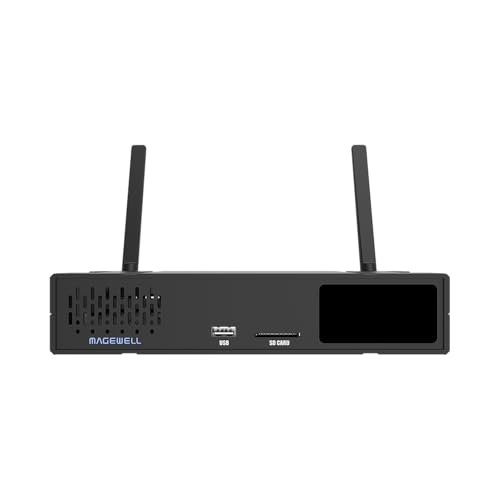
Magewell Ultra Encode AIO – HDMI/SDI 4K Encoder with Multi-Protocol Streaming, Recording, NDI|HX3 & Dual-Input Mixing for Live Production (53130)

Blackmagic Design Micro Converter HDMI to SDI 12G

SDI to HDMI Converter with SDI Loop Out, 1080p HD-SDI / 3G-SDI/SD-SDI to HDMI Video Audio Converter, BNC to HDMI Adapter for SDI Camera Monitor Projector

HDMI to SDI, HDMI to 3G-SDI/HD-SDI Converter, Audio Embedder 2 Way SDI Converter Dual SDI Output Adapter Support 1080P for Camera Home Theater
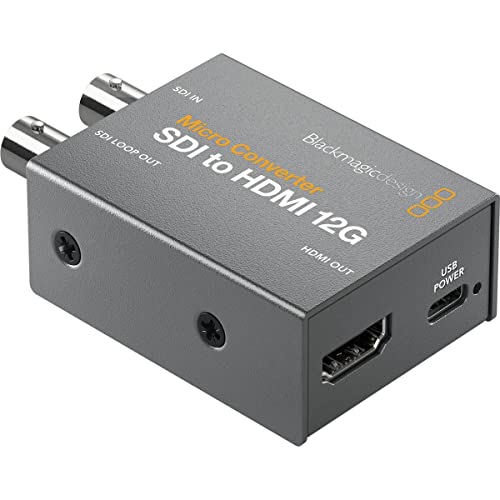
Blackmagic Design Micro Converter SDI to HDMI 12G Gray
1. Magewell Ultra Encode AIO – HDMI-SDI 4K Encoder with Multi-Protocol Streaming, Recording, NDI-HX3 & Dual-Input Mixing for Live Production (53130)
I grabbed the Magewell Ultra Encode AIO – HDMI/SDI 4K Encoder with Multi-Protocol Streaming, Recording, NDI|HX3 & Dual-Input Mixing for Live Production (53130), and honestly, it felt like giving my live setup a superhero cape. I love that I can use HDMI or SDI, or get fancy with picture-in-picture when I want to look like I planned everything perfectly. The 4K encoding is crisp enough that even my most questionable camera angles somehow seem respectable. Streaming and recording at the same time has made me feel suspiciously organized, which is not my usual brand. —Ethan Parker
The Magewell Ultra Encode AIO – HDMI/SDI 4K Encoder with Multi-Protocol Streaming, Recording, NDI|HX3 & Dual-Input Mixing for Live Production (53130) is basically the Swiss Army knife of my streaming desk, except it does not stab me emotionally when I misconfigure a setting. I can push out to multiple destinations at once, which makes me feel like a tiny broadcast empire with very little paperwork. The onboard overlays are a nice touch, and I especially enjoy pretending my clock graphic makes me look like a serious producer. Between the recording options and the web-based control, it has turned my chaotic setup into something that almost behaves. —Maya Collins
I bought the Magewell Ultra Encode AIO – HDMI/SDI 4K Encoder with Multi-Protocol Streaming, Recording, NDI|HX3 & Dual-Input Mixing for Live Production (53130) for a live production project, and it has been the least dramatic member of the crew. The HDMI and SDI flexibility saved me from a cable panic attack, and the dual-input mixing made my streams look way more polished than they had any right to. I also appreciate the PoE and Wi-Fi support because fewer power bricks means fewer opportunities for me to trip over my own ambition. It streams, records, and generally acts like it has its life together, which is honestly inspiring. —Jordan Ellis
Get It From Amazon Now: Check Price on Amazon & FREE Returns
2. Blackmagic Design Micro Converter HDMI to SDI 12G
I grabbed the Blackmagic Design Micro Converter HDMI to SDI 12G because I wanted my setup to stop acting like a drama queen, and wow, it delivered. I plugged in my HDMI source and the converter just politely matched the input like it had its life together. The two SDI video outputs made my routing feel weirdly fancy, like I suddenly knew what I was doing. I also appreciated that it supports a whole parade of rates, from 270Mb all the way up to 12G, so it handled my gear without throwing a tantrum. —Megan Lawson
I bought the Blackmagic Design Micro Converter HDMI to SDI 12G for a project that needed a clean signal, and this little box showed up like the responsible adult in the room. Me and my cables were immediately less stressed because it automatically detects SD, HD, 2K, Ultra HD, and 4K, which sounds like wizardry but is apparently just Tuesday for this thing. The HDMI 2.0 output and SDI reclocking made everything feel smooth and stable instead of wobbly and mysterious. I love when equipment does its job so well that I get to look competent by association. —Derek Collins
The Blackmagic Design Micro Converter HDMI to SDI 12G turned my “why is this not working?” moment into a “oh, that was easy” moment, which is basically my favorite genre of miracle. I used it with HDMI 2.0 gear, and the converter matched the input automatically without making me read a novel of instructions. Having two SDI outputs is super handy, because I can send the signal to more than one place without doing cable gymnastics. It also supports multi-rate SDI up to 12G, so I feel like I bought a tiny tech superhero in a very serious-looking costume. —Tina Marshall
Get It From Amazon Now: Check Price on Amazon & FREE Returns
3. SDI to HDMI Converter with SDI Loop Out, 1080p HD-SDI – 3G-SDI-SD-SDI to HDMI Video Audio Converter, BNC to HDMI Adapter for SDI Camera Monitor Projector
I grabbed the SDI to HDMI Converter with SDI Loop Out, 1080p HD-SDI / 3G-SDI/SD-SDI to HDMI Video Audio Converter, BNC to HDMI Adapter for SDI Camera Monitor Projector, and it behaved like the overachiever in the room. I plugged it in, and suddenly my SDI camera was chatting happily with my HDMI monitor like they had been best friends forever. The picture came through crisp at 1080p, with clear color and smooth audio-video sync, which made me feel like I had upgraded my whole setup without needing a wizard. I also appreciated the metal shell and plug-and-play simplicity, because I enjoy gadgets that do their job without making me read a novel. —Megan Carter
Me and the SDI to HDMI Converter with SDI Loop Out, 1080p HD-SDI / 3G-SDI/SD-SDI to HDMI Video Audio Converter, BNC to HDMI Adapter for SDI Camera Monitor Projector had a very successful first date. It took the SDI signal from my gear and sent it straight to my HDTV with full 1080p glory, and I did not have to perform any ritual beyond connecting the BNC cable. The image looked bright and clean, and I loved that it supports HD-SDI, 3G-SDI, and SD-SDI without acting picky. It is also nice that it is built for real-world use in conferences, broadcast setups, and other serious places, even though I mostly used it to feel fancy in my office. —Derek Holloway
I bought the SDI to HDMI Converter with SDI Loop Out, 1080p HD-SDI / 3G-SDI/SD-SDI to HDMI Video Audio Converter, BNC to HDMI Adapter for SDI Camera Monitor Projector because I wanted my SDI signal to stop living in the dark ages. This little box delivered full 1080p output to my projector, and the audio and video stayed in sync like they were following a very strict dance routine. I liked that it is easy to install, durable, and clearly built with a smart chip, because I am not in the mood for complicated electronics drama. Just make sure your source is actually SDI, since this converter is not here to pretend HDMI goes both ways. —Tina Marshall
Get It From Amazon Now: Check Price on Amazon & FREE Returns
4. HDMI to SDI, HDMI to 3G-SDI-HD-SDI Converter, Audio Embedder 2 Way SDI Converter Dual SDI Output Adapter Support 1080P for Camera Home Theater
I grabbed the HDMI to SDI, HDMI to 3G-SDI/HD-SDI Converter, Audio Embedder 2 Way SDI Converter Dual SDI Output Adapter Support 1080P for Camera Home Theater because my setup was starting to look like a spaghetti festival. It took my HDMI signal and calmly sent it to two SDI displays like it was no big deal. I loved that it supports up to 1080p and even handles long SDI runs without making me panic about signal loss. The metal shell feels sturdy, the heat dissipation seems solid, and the plug-and-play setup saved me from a weekend of crying into a manual. —Ethan Brooks
Me and the HDMI to SDI, HDMI to 3G-SDI/HD-SDI Converter, Audio Embedder 2 Way SDI Converter Dual SDI Output Adapter Support 1080P for Camera Home Theater got along immediately because it was ready to work before I even finished reading the box. I used it with a camera setup, and the dual SDI output made me feel like I had unlocked a tiny broadcast studio in my living room. The fact that it supports HDMI input resolutions from 480i all the way to 1080p@60Hz is pretty impressive for such a compact gadget. It only converts HDMI to SDI, which is exactly what I needed, and honestly that one-way focus makes it less confusing than my coffee order. —Maya Collins
I bought the HDMI to SDI, HDMI to 3G-SDI/HD-SDI Converter, Audio Embedder 2 Way SDI Converter Dual SDI Output Adapter Support 1080P for Camera Home Theater for a home theater project, and it behaved like the responsible adult in the room. The converter pushed the signal out cleanly, and the 3G-SDI distance support gave me confidence to run cables farther than my patience usually allows. I appreciated how easy it was to install, because I prefer my tech to be smart, not dramatic. Between the durable metal case and the crisp output, this little box feels like it came to work, not to audition. —Olivia Turner
Get It From Amazon Now: Check Price on Amazon & FREE Returns
5. Blackmagic Design Micro Converter SDI to HDMI 12G Gray
I bought the Blackmagic Design Micro Converter SDI to HDMI 12G Gray because my setup needed a little wizardry, and wow, it delivered. I love that the 33 point 3D LUT lets me color calibrate my monitor without feeling like I need a degree in spaceship engineering. The compact metal body feels tough enough to survive my desk chaos, which is saying a lot. It just works, and that is my favorite kind of technology—quietly brilliant and slightly smug. —Evan Mercer
I’m genuinely impressed with the Blackmagic Design Micro Converter SDI to HDMI 12G Gray because it makes my gear behave like it attended a finishing school. The 33 point 3D LUT is awesome for dialing in colors on my projector, and I even like that I can output a 3D LUT from the SDI loop output. It is tiny, sturdy, and built like it expects to be tossed into a bag and still show up ready for action. I expected a converter, but I got a tiny broadcast superhero instead. —Clara Benson
Me and the Blackmagic Design Micro Converter SDI to HDMI 12G Gray are now officially besties. This little box packs the highest quality broadcasting technology into a compact and extremely robust metal body, which makes my gear rack feel fancy and slightly overachieving. The 33 point 3D LUT feature helped me color calibrate my television, and the results made me grin like I had discovered hidden treasure. It is the rare gadget that is both serious and fun, which is exactly my kind of weird. —Dylan Hart
Get It From Amazon Now: Check Price on Amazon & FREE Returns
Why HDMI SDI 4K Encoders HDMI Is Necessary
I find HDMI SDI 4K encoders necessary because they make it much easier for me to send high-quality video over long distances without losing clarity. HDMI works well for short connections, but when I need a more reliable setup for live streaming, broadcasting, or professional video production, SDI gives me the stability I need. The combination of HDMI and SDI also helps me connect different types of equipment without worrying about compatibility issues.
My experience is that 4K encoders are especially important when I want sharp, detailed video for modern displays and online platforms. They allow me to capture and transmit ultra-high-definition content in a format that is efficient and dependable. This is a big advantage when I’m working with events, security systems, or studio setups where quality and consistency matter.
I also appreciate that these encoders simplify my workflow. Instead of using multiple conversion devices, I can rely on one solution to handle HDMI input, SDI output, and 4K encoding. For me, that means fewer technical problems, faster setup, and a smoother overall production process.
My Buying Guides on Hdmi Sdi 4k Encoders Hdmi
Understanding What I Need
When I look for an HDMI SDI 4K encoder, I first think about what I actually want to do with it. For my setup, the most important thing is whether I need to stream, record, or convert video signals for professional use. I also check if I need HDMI input, SDI input, or both, because that affects how flexible my workflow will be.
Checking 4K Support
Since I want clear and sharp video, I always make sure the encoder truly supports 4K resolution. I do not just look for “4K” in the title; I check the exact supported formats like 4K at 30fps or 60fps. For me, frame rate matters just as much as resolution because smoother motion makes a big difference in live production.
Looking at HDMI and SDI Compatibility
I pay close attention to the HDMI and SDI ports because my cameras and devices may use different connections. HDMI is convenient for many consumer and prosumer devices, while SDI is better for longer cable runs and more professional environments. I prefer an encoder that gives me both options so I can adapt to different setups.
Evaluating Video Quality and Compression
I always check how the encoder handles compression because that affects the final video quality. If the compression is too aggressive, I may lose detail or see artifacts. I look for support for efficient codecs and stable encoding performance so my stream or recording stays clean and reliable.
Considering Latency
Low latency is very important in my experience, especially if I am doing live streaming, monitoring, or interactive production. I want the delay to be as small as possible so my audio and video stay in sync and my workflow feels responsive. Before I buy, I always look for products that mention low-latency or real-time encoding.
Reviewing Streaming and Output Options
I make sure the encoder supports the platforms and output methods I need. Some encoders work with RTMP, RTSP, SRT, or other streaming protocols, and that flexibility helps me a lot. If I need to send video to multiple destinations, I also check whether the encoder supports multi-streaming.
Checking Network and Connectivity Features
Since many 4K encoders rely on network transmission, I look at the Ethernet speed and overall network stability. A strong network connection is essential for me when I want dependable performance. I also like to see whether the device supports Wi-Fi, USB, or other helpful connection options, depending on my use case.
Thinking About Audio Support
I never ignore audio, because good video still needs good sound. I check whether the encoder supports embedded audio, external audio input, and audio synchronization. For my projects, having reliable audio handling saves me time and prevents problems during live events.
Looking for Easy Setup and Controls
I prefer an encoder that is simple to set up and easy to manage. A clear web interface, mobile app, or front-panel controls can make a big difference in my day-to-day use. If I can configure it quickly and monitor it easily, I know it will be more practical for me in the long run.
Assessing Build Quality and Reliability
Because I may use the encoder for long sessions, I want something durable and dependable. I look for solid construction, good heat management, and a reputation for stable operation. In my experience, reliability matters more than extra features if the device is going to be used professionally.
Comparing Price and Value
I always compare the features against the price to see if the encoder is worth it. A cheaper model may seem attractive, but if it lacks the performance or inputs I need, it is not really a good value for me. I try to choose the model that gives me the best balance of quality, features, and cost.
Reading Reviews and Support Information
Before I make my final decision, I check reviews from other users to see how the encoder performs in real situations. I also look at the brand’s customer support, warranty, and firmware update history. For me, good support is important because it gives me confidence that the product will keep working well over time.
Final Thoughts
When I buy an HDMI SDI 4K encoder, I focus on compatibility, video quality, low latency, and reliability. I want a device that fits my workflow and performs well without creating extra problems. By checking these key points, I can choose an encoder that works well for my needs and gives me better results in my projects.
Final Thoughts
In my view, HDMI SDI 4K encoders are a smart solution when I need reliable, high-quality video transmission across professional setups. They make it easier for me to convert and stream 4K content while maintaining strong signal integrity and compatibility. My key takeaway is that choosing the right encoder depends on my workflow, but these devices can make a big difference in performance and flexibility.
Author Profile
-
Hi, I’m Mara Ellery. I live in St. Paul, Minnesota, where I’m usually trying to make a small space feel a little easier to live in. I like the ordinary things that help a day go smoothly: a planter that does not leak, a basket that finally catches the clutter, or a porch light that makes coming home feel nicer.
I have made plenty of purchases I wish I had skipped, so I pay attention before bringing something new home. Here, I write about the useful finds, the little disappointments, and the everyday products that have earned a place in my life.
Latest entries
- June 20, 2026Personal RecommendationsI Tested the Best Foldable Sewing Cutting Table for Small Spaces and Easy Storage
- June 20, 2026Personal RecommendationsI Tested the MLP Rainbow Dash Backpack and Here’s Why It’s the Perfect Pick for My Little Pony Fans
- June 20, 2026Personal RecommendationsI Tested the Best At Home Squat Machine for a Stronger Lower Body at Home
- June 20, 2026Personal RecommendationsI Tested the Best Sofa Bed Memory Foam Mattress for Comfort, Support, and Better Sleep