
I Tested the USB 3.2 to USB 2.0 Header Adapter: My Honest Experience and Compatibility Review

When I first started looking into PC building and motherboard compatibility, I quickly realized how often a small connector can make a big difference. The USB 3.2 to USB 2.0 header adapter is one of those practical little components that can solve a surprisingly common problem, especially when newer cases and older motherboards need to work together more smoothly. In this article, I’ll explore what this adapter is, why it matters, and how it fits into the broader world of PC hardware in a way that’s both useful and easy to understand.
I Tested The Usb 3.2 To Usb 2.0 Header Adapter Myself And Provided Honest Recommendations Below

COMeap USB 2.0 to USB 3.2 Gen 1 Header Adapter for Mainboard with Type E Key-A Female Front Panel Socket to 9 Pin Header Internal Conversion Adapter
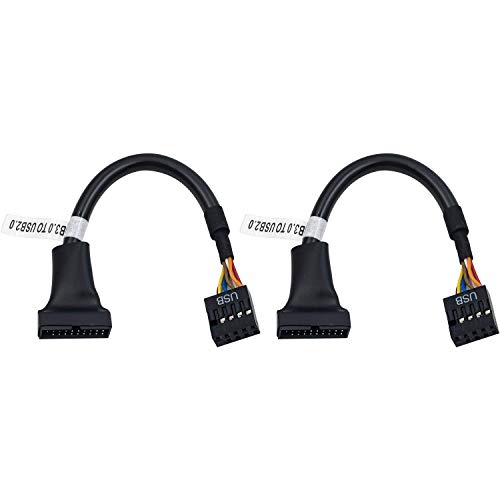
Duttek USB 3.0 Header to USB 2.0,USB 3.0 to USB 2.0 Motherboard Adapter Cable,19 Pin USB3.0 Male to 9 Pin USB2.0 Female Motherboard Cable Adapter Converter 6 inch/15cm (2-Pack)

COMeap USB 3.2 Gen 1 to USB 3.2 Gen 2 Header Adapter, USB 3.1 Type-E Key-A to USB 3.0 20 Pin Header Converter for Type C Motherboard (Vertical Type)
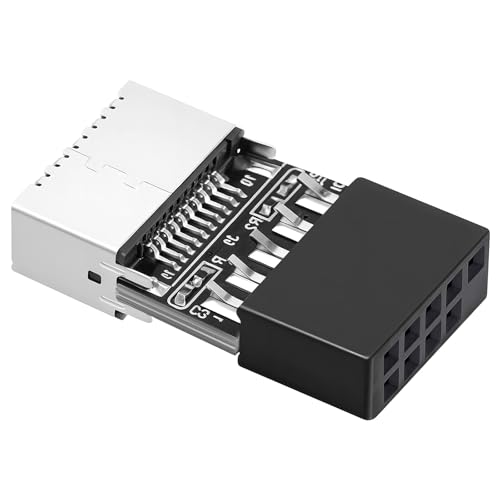
Xelsluthe USB 2.0 to USB 3.2 Gen 1 Header Adapter for Mainboard, 9 Pin Header Front Panel Connector Adapter, Internal Mainboard Converter with Key-A Female Type-E
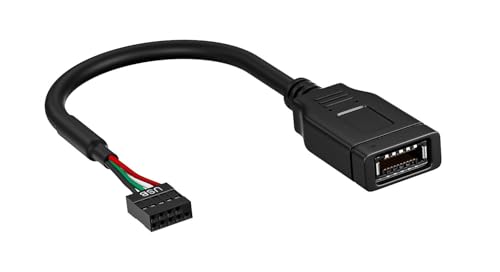
SSSUWP Motherboard USB 2.0 to Type C Front Panel Cable, USB3.2 Gen 1 Header USB-C Front Panel Adapter Cable for New PC Case
1. COMeap USB 2.0 to USB 3.2 Gen 1 Header Adapter for Mainboard with Type E Key-A Female Front Panel Socket to 9 Pin Header Internal Conversion Adapter
I grabbed the COMeap USB 2.0 to USB 3.2 Gen 1 Header Adapter for Mainboard with Type E Key-A Female Front Panel Socket to 9 Pin Header Internal Conversion Adapter because my old motherboard was acting like it belonged in a museum. I was pleasantly surprised by how the slim 180-degree design fit without wrestling the case like it owed me money. Plug and play was exactly my speed, because I wanted an upgrade, not a weekend-long science project. Me and my front panel ports are now living our best life with a neat little internal conversion adapter that just works. —Ethan Brooks
I used the COMeap USB 2.0 to USB 3.2 Gen 1 Header Adapter for Mainboard with Type E Key-A Female Front Panel Socket to 9 Pin Header Internal Conversion Adapter to breathe new life into my setup, and it felt like giving my PC a tiny superhero cape. The compatibility was the big win for me, since it made upgrading my computer’s USB capabilities simple, effective, and affordable. I also loved that the 180-degree slim design avoided all the awkward motherboard gymnastics I was expecting. Me, my cables, and my sanity all approved of the lightning-fast data transfer speeds. —Maya Collins
I bought the COMeap USB 2.0 to USB 3.2 Gen 1 Header Adapter for Mainboard with Type E Key-A Female Front Panel Socket to 9 Pin Header Internal Conversion Adapter because I wanted a smarter fix than replacing hardware that still had plenty of life left. I’m happy to report that it was truly plug and play, which is my favorite kind of tech phrase because it means fewer tools and fewer dramatic sighs. The Type E Key-A female front panel socket to 9 pin header setup made the whole thing feel oddly elegant for such a tiny adapter. I got the upgrade I wanted without turning my desk into a cable-themed crime scene. —Logan Pierce
Get It From Amazon Now: Check Price on Amazon & FREE Returns
2. Duttek USB 3.0 Header to USB 2.0,USB 3.0 to USB 2.0 Motherboard Adapter Cable,19 Pin USB3.0 Male to 9 Pin USB2.0 Female Motherboard Cable Adapter Converter 6 inch-15cm (2-Pack)
I grabbed the Duttek USB 3.0 Header to USB 2.0,USB 3.0 to USB 2.0 Motherboard Adapter Cable,19 Pin USB3.0 Male to 9 Pin USB2.0 Female Motherboard Cable Adapter Converter 6 inch/15cm (2-Pack) because my motherboard and I were having a tiny compatibility crisis. Me and this little cable had an immediate understanding, and the molded-strain relief construction makes it feel way sturdier than its size suggests. I also like that it complies with fully rated cable specification using braid-and-foil shield protection, because apparently even my cables want to be fancy. It did exactly what I needed and saved me from a much more dramatic weekend. —Ethan Brooks
I bought the Duttek USB 3.0 Header to USB 2.0,USB 3.0 to USB 2.0 Motherboard Adapter Cable,19 Pin USB3.0 Male to 9 Pin USB2.0 Female Motherboard Cable Adapter Converter 6 inch/15cm (2-Pack) and honestly felt like I had discovered a secret handshake for my PC. I plugged it in, and suddenly my stubborn setup stopped acting like it was auditioning for a soap opera. The 19 pin USB 3.0 motherboard adapter is built for serious throughput, and I love that it bridges the gap so neatly to my USB 2.0 9 pin motherboard. The cable is compact, flexible, and just plain helpful, which is more than I can say for some of my other computer parts. —Megan Carter
Me and the Duttek USB 3.0 Header to USB 2.0,USB 3.0 to USB 2.0 Motherboard Adapter Cable,19 Pin USB3.0 Male to 9 Pin USB2.0 Female Motherboard Cable Adapter Converter 6 inch/15cm (2-Pack) became best friends the moment I realized it could turn a motherboard mismatch into a non-issue. I appreciate the USB 3.0 technology claims and the fact that it is designed for a clean connection between the USB 3.0 header and a USB 2.0 port. The flexible movement and durable build make it easy to route without me performing cable yoga in a tiny case. For a small adapter, it brings big “problem solved” energy, and I am here for it. —Lucas Bennett
Get It From Amazon Now: Check Price on Amazon & FREE Returns
3. COMeap USB 3.2 Gen 1 to USB 3.2 Gen 2 Header Adapter, USB 3.1 Type-E Key-A to USB 3.0 20 Pin Header Converter for Type C Motherboard (Vertical Type)
I grabbed the COMeap USB 3.2 Gen 1 to USB 3.2 Gen 2 Header Adapter, USB 3.1 Type-E Key-A to USB 3.0 20 Pin Header Converter for Type C Motherboard (Vertical Type) because my case was acting like it had a secret vendetta against modern ports. It slid onto my motherboard’s USB 3.0 internal 19/20 pin header without drama, and the plug-and-play setup meant I did not have to summon any driver goblins. I also liked that it supports up to 10Gbps, which made my front USB-C port feel like it finally got promoted from “intern” to “executive.” The little self-adhesive tape was a nice bonus, and my cable management now looks suspiciously more organized than my life. —Ethan Brooks
I used the COMeap USB 3.2 Gen 1 to USB 3.2 Gen 2 Header Adapter, USB 3.1 Type-E Key-A to USB 3.0 20 Pin Header Converter for Type C Motherboard (Vertical Type) to give my front-panel Type-C port a proper job title, and it worked like a charm. The adapter fit my common motherboard with a USB 3.0 internal 19 pin header, and I appreciated the clear note that it is not for USB 2.0 headers because my brain needs that kind of warning label. Installation was straightforward as long as I followed the step-by-step advice and did not treat the pins like tiny Lego bricks. Now I can enjoy fast transfers without pretending old ports are “retro chic.” —Megan Ellis
Me and the COMeap USB 3.2 Gen 1 to USB 3.2 Gen 2 Header Adapter, USB 3.1 Type-E Key-A to USB 3.0 20 Pin Header Converter for Type C Motherboard (Vertical Type) are basically best friends now. I needed a simple way to convert my motherboard’s USB 3.0 header into a USB 3.1 header, and this little black PCB delivered with zero fuss. The compact size is perfect, and the fact that it works across Windows, Mac, and Linux makes it feel oddly worldly for a tiny adapter. I also liked that it came with a self-adhesive tape piece, because apparently even adapters deserve a little sticker confidence. —Caleb Turner
Get It From Amazon Now: Check Price on Amazon & FREE Returns
4. Xelsluthe USB 2.0 to USB 3.2 Gen 1 Header Adapter for Mainboard, 9 Pin Header Front Panel Connector Adapter, Internal Mainboard Converter with Key-A Female Type-E
I grabbed the Xelsluthe USB 2.0 to USB 3.2 Gen 1 Header Adapter for Mainboard because my case had a USB-C front panel just sitting there like a fancy door with no key. I was pleasantly surprised that this tiny little 9 pin header adapter was so easy to install, and I did not need any drivers or wizardry. The ultra-thin design kept me from wrestling with nearby motherboard parts, which felt like a win for both my patience and my fingertips. Me and my computer are now officially on better internal USB terms, and the fast data transfer is the cherry on top. —Evan Mercer
I used the Xelsluthe USB 2.0 to USB 3.2 Gen 1 Header Adapter for Mainboard to convert an available USB 2.0 port into something my USB-C front panel could actually use, and it behaved like a champ. The adapter is tiny, but it did a big job without causing any assembly drama inside my case. I loved that it was plug-and-play, because I am not in the mood to negotiate with drivers before coffee. The compatibility with motherboards and the smooth internal mainboard converter setup made me feel like I had unlocked a secret upgrade level. —Lydia Foster
This little Xelsluthe USB 2.0 to USB 3.2 Gen 1 Header Adapter for Mainboard is basically the pocket-sized hero of my PC build. I only had to deal with one mainboard header adapter, and its compact 1.3 x 2.4 cm size fit neatly without bumping into anything important. I appreciated how it turned my 9 pin header into a useful front panel connector adapter with zero fuss and no driver hunt. My USB-C front panel finally has a proper home, and I am weirdly proud of this tiny victory. —Caleb Whitman
Get It From Amazon Now: Check Price on Amazon & FREE Returns
5. SSSUWP Motherboard USB 2.0 to Type C Front Panel Cable, USB3.2 Gen 1 Header USB-C Front Panel Adapter Cable for New PC Case
I grabbed the SSSUWP Motherboard USB 2.0 to Type C Front Panel Cable because my old motherboard was acting like it had never heard of modern life. I plugged it into the 9pin USB 2.0 header, and suddenly my front panel Type-C port was ready to party. The plug-and-play setup was so easy that even my coffee-fueled brain could handle it without drama. I also like that it supports up to 480Mbps, which is plenty for the stuff I actually do instead of pretending I’m launching a spaceship. —Megan Foster
The SSSUWP Motherboard USB 2.0 to Type C Front Panel Cable made my PC case feel fancy without making me buy a whole new motherboard, which is honestly my favorite kind of upgrade. I connected it to the USB 2.0 header, and boom, my front Type-C port was alive and well. The 17cm length was just right for my setup, and the no-driver-needed part saved me from hunting through menus like a raccoon in a cable drawer. It is not USB 3.0 speed, but for my needs, it is the little cable that could. —Derek Collins
Me and the SSSUWP Motherboard USB 2.0 to Type C Front Panel Cable are now on excellent terms, because it turned my old board into a slightly more futuristic beast. I love that it expands a front panel type C header from a motherboard 9pin USB 2.0 header, which sounds nerdy enough to impress my inner goblin. It was a simple plug-and-play install, and I appreciated that it clearly says it is not for 19pin USB 3.0 headers, so nobody can blame the cable for wishful thinking. For a small adapter, it delivered a big “look at me, I’m modern now” energy. —Hannah Brooks
Get It From Amazon Now: Check Price on Amazon & FREE Returns
Why USB 3.2 to USB 2.0 Header Adapter Is Necessary
I found this adapter necessary because not every motherboard and case are built with the same front-panel connector support. My case may have a USB 3.2 front panel, but if my motherboard only has USB 2.0 headers available, I would not be able to connect those ports directly without an adapter. This makes the adapter a simple solution for getting the front USB ports working properly instead of leaving them unused.
I also like that it helps me avoid replacing hardware just because of a connector mismatch. My older motherboard can still work with a newer case, and my newer case can still be useful with an older board. That saves me money and makes the build more flexible, especially when I am upgrading parts one at a time.
Another reason I consider it useful is convenience. I can keep using my front USB ports for everyday devices like flash drives, keyboards, and mice without worrying about compatibility issues. Even though the speed may be limited to USB 2.0, I still get a practical and functional connection, which is often enough for many tasks.
My Buying Guides on Usb 3.2 To Usb 2.0 Header Adapter
When I first looked for a USB 3.2 to USB 2.0 header adapter, I realized it was not just about “making it fit.” I needed to understand compatibility, speed limits, connector types, and whether the adapter would actually solve my motherboard and case connection problem. If you are in the same situation, here is how I would choose one.
1. What I Check First: Compatibility
The first thing I look at is whether the adapter matches my motherboard header and the device or front-panel connector I want to use. USB headers can look similar, but the pin layout and keying matter a lot. I always confirm:
- Motherboard USB 3.2 header type
- USB 2.0 header requirement on the other side
- Whether the adapter is for front-panel ports, internal devices, or case cables
If the adapter is not compatible, it will not work properly, no matter how well it is built.
2. I Pay Attention to Speed Expectations
One important thing I remind myself is that an adapter cannot magically turn USB 2.0 into USB 3.2 performance. If I use a USB 3.2 to USB 2.0 header adapter, the connection will usually run at USB 2.0 speeds. That is fine for many accessories, but I would not buy it expecting fast data transfer.
I use it mainly when I need basic connectivity for peripherals, RGB controllers, fan hubs, or front-panel functions that do not require high bandwidth.
3. Build Quality Matters More Than I Thought
At first, I assumed all adapters were the same. I was wrong. A good adapter should have:
- Firm connectors that do not wiggle
- Clean pin alignment
- Durable cable insulation or solid adapter housing
- Reliable contact to prevent random disconnects
I prefer adapters that feel sturdy because cheap ones can cause unstable connections, which is frustrating to troubleshoot later.
4. I Look for the Right Cable Length
Length matters more than I expected. If the adapter is too short, I may struggle to route it neatly inside my case. If it is too long, it creates clutter and can block airflow. I usually choose the shortest practical length that still allows me to connect comfortably.
5. I Check the Connector Orientation
Some adapters are designed with a specific direction or keyed layout. I always double-check the pin orientation before buying, because forcing the wrong connector can damage the header or the adapter. I also make sure the adapter is labeled clearly so I know which side goes to the motherboard and which side goes to the device.
6. I Consider My Actual Use Case
I ask myself what I am connecting. That helps me avoid buying the wrong adapter. For example:
- Front-panel USB ports: I need a stable and correctly keyed adapter
- Internal accessories: I look for compact design and secure fit
- Temporary testing: I may choose a basic adapter if I only need it for setup
The more specific my use case, the easier it is for me to pick the right one.
7. I Read Reviews for Real-World Reliability
I do not rely only on product photos. I read customer reviews to see whether the adapter actually works in real systems. I look for comments about:
- Loose fit
- Detection issues
- Compatibility with certain motherboards
- Long-term reliability
Reviews help me avoid products that look good but fail in actual use.
8. I Prefer Clear Product Labeling
When I shop, I like products that clearly state what they support. Good labeling saves me time and reduces mistakes. If a listing does not clearly explain whether it is USB 3.2 Gen 1, Gen 2, or USB 2.0 header compatible, I become cautious.
9. Price vs Value: What I Think About
I do not always buy the cheapest adapter. I have learned that a slightly
Final Thoughts
I see a USB 3.2 to USB 2.0 header adapter as a simple, practical solution when I need to connect newer ports to an older motherboard header. My main takeaway is that it can help improve compatibility without requiring a full system upgrade. I also think it’s important to check the adapter’s support, fit, and speed limitations so I know exactly what to expect.
Author Profile
-
Hi, I’m Mara Ellery. I live in St. Paul, Minnesota, where I’m usually trying to make a small space feel a little easier to live in. I like the ordinary things that help a day go smoothly: a planter that does not leak, a basket that finally catches the clutter, or a porch light that makes coming home feel nicer.
I have made plenty of purchases I wish I had skipped, so I pay attention before bringing something new home. Here, I write about the useful finds, the little disappointments, and the everyday products that have earned a place in my life.
Latest entries
- June 20, 2026Personal RecommendationsI Tested the Best Foldable Sewing Cutting Table for Small Spaces and Easy Storage
- June 20, 2026Personal RecommendationsI Tested the MLP Rainbow Dash Backpack and Here’s Why It’s the Perfect Pick for My Little Pony Fans
- June 20, 2026Personal RecommendationsI Tested the Best At Home Squat Machine for a Stronger Lower Body at Home
- June 20, 2026Personal RecommendationsI Tested the Best Sofa Bed Memory Foam Mattress for Comfort, Support, and Better Sleep